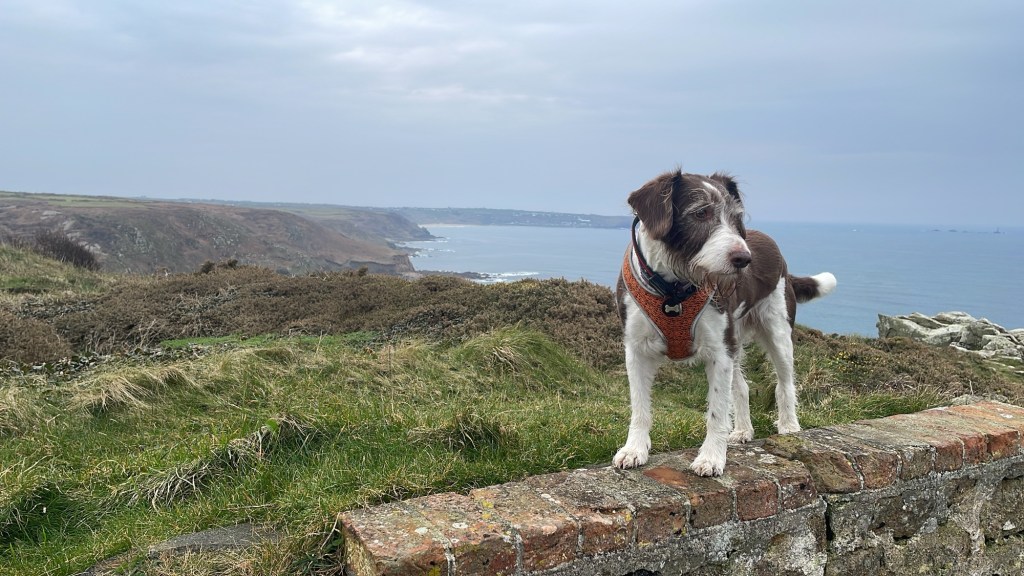
It was still March, hardly the best time to take off to the far reaches of the far reaches but Doggo insisted. In rather a melodramatic fashion.
“My eyes grow dim, my barbe is riven with silver hairs, I no longer scent a squirrel at one hundred paces,” he slurred one evening in his Marseille accent as he rested his head on my knee.
“I must return to Cornwall before the great god Anubis calls me to my final resting place.”
He looked up at me, his big brown eyes unblinking, pleading with my stone heart.
“Cornwall? It’s bloody miles mate,” I reasoned. “You’d be sitting in the back of the car for hours. You know you’re not keen on long car journeys. And there’s the ferry.”
“Non, non, mon ami,” he said, deliberately playing up the accent. “To see Cornwall one more time, I will walk across broken grass.”
“Glass. It’s broken glass. Not grass. You like grass.“
Doggo, who is nearly 11 now, raised his head and gave me a withering stare.
“Pedantry does not become you,” he muttered as Katto, sitting high on her perch watched us like a zealous Stasi agent.
“I know my friends have long since gone but I need to put my paw marks in theirs, feel the Sennen sand between my claws and breathe in the sweet scent of rotting gull.
“Mousehole, Marazion the Mont of St Michel… ah this is impeccable, mon ami. Perfection with a capital Pee. To ramble on that coastal path to Cape Cornwall, past the human workings, to look out across the water, cavort after a deer, oh this is my wish.”
I tried to reason with him.
“But Doggo, you don’t like the sea.”

“I don’t not like the sea,” he retorted.
“You run away from it.”
“Only when it comes rushing in at me. This is a logical response.”
“Zico didn’t think so. He loved the sea.”
“Zico is… was, bof, un peu différent. A bit mad. A labrador. They are very sensible until they spot the water.”
Doggo paused, remembering the gallops he’d had with his old chocolate chum.
“But he was also magnificent. Foolish maybe when it came to those roaring waves but brave. And gentle too. He was a champion.”
“What about Charlie?”
He snorted.
“I liked him as well but..”
“But what?”
“He always had too much to say. But what do you expect from a King Charles spaniel? Anyone who thinks they’re royalty has too much to say,” added the French republican.
“But when he wasn’t talking I liked him well. Those winter nights we’d lie in front of the fire all three of us and then after the humans went to bed and the fire died down we would huddle together. I could feel Charlie’s breathe, his little frantic heart beating away, boom biddy-boom. Yes, he was my brother. They both were…
“Ok, let’s go to Cornwall.”
From Corbeil in the Ile de France to the bottom left-hand corner of Cornwall is a fair old trek, around 1000 kilometres. A four-hour drive to Dieppe – an hour and a half of which was getting round Paris – and then in to the ferry.

Doggo is accustomed to it now, the brief walk at the port while we wait in the queue, a last sip of water from his bowl which I then carefully place on the floor in front of his seat, the gentle roll into the bowels of the ship and then that awful moment of abandonment.
I leave a window slightly open and stick a few treats on his seat. I don’t know why I still do this. I imagine he will save a few for later but I suspect he has scoffed the lot by the time I am up the stairs with my pillow and napsack and hunting for a lounger.
It’s a gentle crossing: we both sleep well before we are out the other side, hurrying through the verdant rolling pastures of Sussex countryside. England’s green and pleasant land: it’s always good to take it in.
We weren’t going direct to Cornwall: we stop in Salisbury for a night before making a pitstop in Yeovil. It’s important to keep tabs on the siblings.
From there we set off down to Ilchester where we pick up the familiar A303. It’s a road couched in myth it seems; I have a whole book written about it sitting unread on my bedside table while Joe Strummer in his song ‘Mega Bottle Ride’ name-checked a stretch of it which had become notorious after someone thought it would be a good idea to make it three lanes — that’s one lane in each direction and a shared overtaking lane down the middle. What could possibly go wrong?
“And it was pretty goddamn hazardous
Out on the Ilminster bypass, out on the Ilminster bypass…”
When the A303 stops, the A30 takes over. A straight run on narrowing roads which means that once you get into Cornwall everything slows down. It doesn’t matter: it’s a lovely drive with a low winter sun picking out the sparkling moisture on the hedges and along the roadside.
I stop in the Penzance Tesco to pick up some provisions but when I emerge 20 minutes later, the clear skies have been shrouded in tin-tack grey and the rain is stair-rodding. My thoughts of a quick walk on Sennen Beach give way to a desire to get to our digs, unload and see how the skies are looking in an hour.

Doggo lets out a long sigh, yawns and goes back to sleep.
The Airbnb in St Just is slightly smaller than I’d imagined but perfectly adequate for Doggo and me. Cosy even. Having said that, there wasn’t a lot of floor space once I’d pulled the bed out so Doggo had the rare opportunity to sleep alongside me.
There was a period, of course, when Doggo did sleep on my bed although I was never in it at the time. It happened when my wife Jacqueline was ill. He would clamber up and they would spoon, Jac taking small comfort in the smoothness of his pelt, the gentleness of his presence. Nurse Doggo. That’s a while back now.
It’s not something we do at home: two elderly gentlemen, we are quite happy to have our own corners where we can sleep, snore, fart and chase squirrels as much as we like.
Just to clarify, we were in St Just in Penwith, rather than St Just in Roseland, just outside Truro. It is the most westerly town in England and has around 5,000 on the electoral role. Like all big villages or small towns in England it has a church, several fine pubs and cafes in what you might term the market square, a war memorial and a very fine fish and chip shop. And there’s the obligatory antique shop, run by a whiskery artist who has an assortment of marine memorabilia – pictures, bells, anchors, the petty officer’s stores.

There are several pubs to choose from but we ended up most evenings in the Star Inn, which is younger than it seems. It has the ambience of a medieval pub with its two rooms, unfussy bars, lowish ceilings but it was in fact only built in the mid-19th century. Even so it feels like a pub with history whispering from every beam. Apparently the 18th century preacher John Wesley stayed here when he was doing the rounds: not entirely sure he would have approved of the consumption of alcohol within these walls but who is going to tell him?
The locals were friendly, that’s for sure, especially to Doggo who was milking the attention he could garner by wiggling his ears.
“It is my party trick,” he explains. “Nobody can resist.”
Our first night we do eventually get out between showers for a swift walk, across a field which is not shy of telling dogwalkers of the dangers of neosporosis. Let your dog crap in the field and you risk spreading the disease amongst cattle, resulting in bovine abortion and serious illness. the lesson being: scoop the poop.
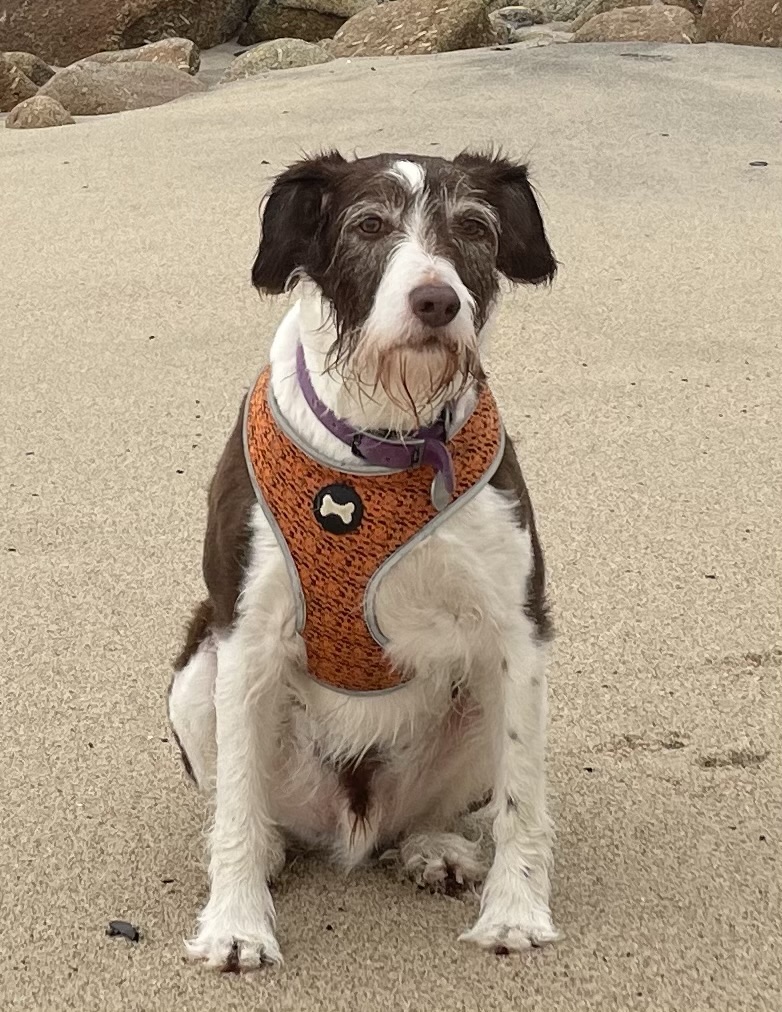
It’s not a difficult thing to do although the French still have a problem with the concept of carrying a supply of bags and collecting up the crap after your dog has answered nature’s call. I love the French dearly but this is one area where we are unlikely to see eye-to-eye. It’s so simple.
Our walks over the coming days take us around the Penwith region of Cornwall. It is the most divine country. And I do mean divine in a biblical sense: Wesley probably felt it too but this is God’s country. Humans will never control it.
The wind will change in a trice. The foul squawl coming in from the Atlantic will dump its load just ten minutes after you set off on a walk in glorious sunshine. You will be drenched, the wind will howl, the sea will rise up and crash against the unforgiving cliffs and on to the long yellow sandy beaches that wouldn’t be out of place in a travel brochure for the West Indies. Yes, you even find palm trees in Cornwall.
Ten minutes of filth and the wind drops, the waves calm and the shoreline is once again bathed in clear clean sunlight, the light that has inspired artists for decades.
It is the kind of climate the keeps men honest. Every time they set out in a fishing boat, it is with a prayer that they will return safely. Too often over the centuries, Poseidon has summoned up the waves to spite the humans and keep them in their place.
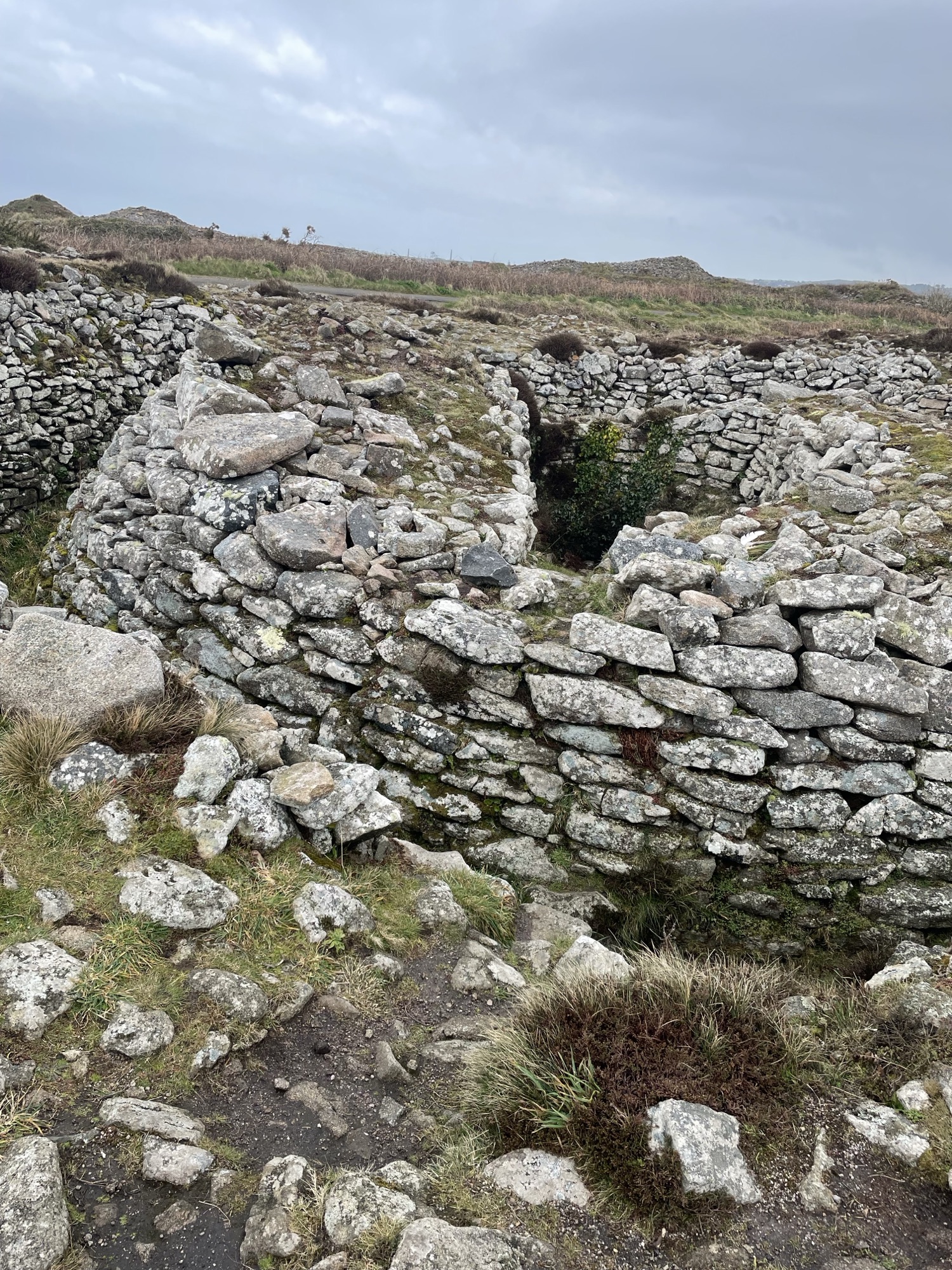

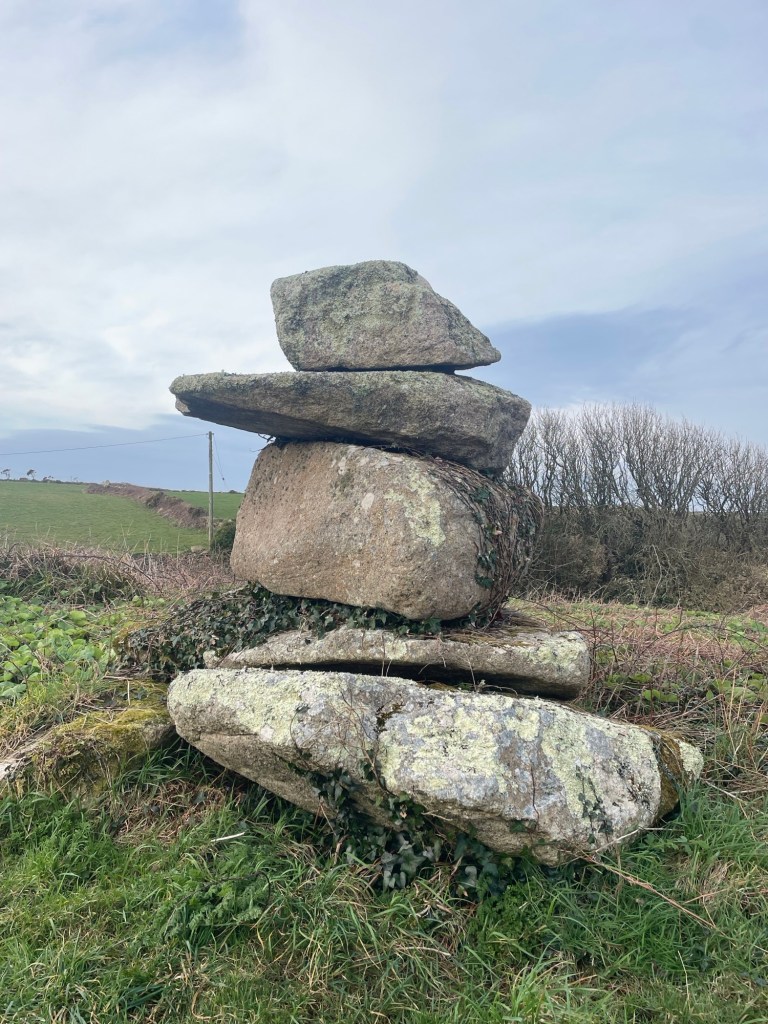
The Cornish know this well enough: the shadow of the Penlee Life Boat tragedy in 1981 when 16 people lost their lives still weighs heavily. Walk into most pubs in Penwith and somebody will have a connection to that devilish December night.
So although it is a tremendously popular holiday destination it is not the most comfortable. It is glorious but it can be fickle and even villainous. And that is to its credit. It will not bow.
Doggo and I took a morning off to travel up to St Ives, which is beautiful but has way too many tourists every day of the year, but largely pottered around the south-west tip. I didn’t take him down the Geevor Tin Mine – although this is a tremendous visit for non-canines which gives you a sniff of the industry that made this county thrive.
If you’ve read or watched ‘Poldark’, you’ll know all about it. Cornwall equals mining. As an industry it has been going since approximately 2000 BC. Tin and copper mainly with a sprinkle of silver, zinc and old lace. Sorry, not old lace: arsenic. Silver, zinc and arsenic.
The wealthy grew wealthier but for most people life just chugged along.
“Stop being so, how you say, woke..,” whispers Doggo as I tap away. “Your family done all right out of Cornwall, exploiting the locals…”
“That will be the French side, the Champernownes who came over with William the Conqueror a thousand years ago.”

“Bof, the Normans. Bof. Not French. Stupid Vikings. But I’m just saying. Don’t pretend to be some goody-two-shoes who hasn’t profited .”
“Doggo, the Champernownes lived way east of here.”
“What about that book? The one where he is a villain doing bad things.”
He means Daphne du Maurier’s ‘The House on the Strand’, a time-slip novel set in Tywardreath, near Fowey, where Du Maurier lived, which features a 14th century Sir Henry Champernoune who doesn’t come across as the kindest of men.
“That’s a novel, Doggo, not history. Stop trying to confuse the matter.”
“Oh, I am sorry if you can’t handle the notion of being a capitalist overlord trying to supress the working class and dogs.”

“Doggo, you’d have loved my lot, the Champernownes. They were useless at business. They enjoyed farming and sitting on the sofa: like us without the farming. From riches to rags in a thousand years, that’s our lot.”
He looked at me a moment, pulled back his ears.
“You may continue,” he said.
On a sunny Sunday morning we drove the short distance to Zennor, a wee village which stands over 100 metres above sea level to give you the most glorious views up the coast and out to sea. The coastal path here has some tricky moment, not least the hidden traps of disused mineshafts.

DH Lawrence lived nearby during the First World War. He found the inspiration to complete ‘Women in Love’ there but then had to scarper at short notice after being accused of signalling to German submarines off the coast. During the Second World War the steep cliffs were used for some particularly perilous training exercises, not something to be attempted by the casual Sunday walker.
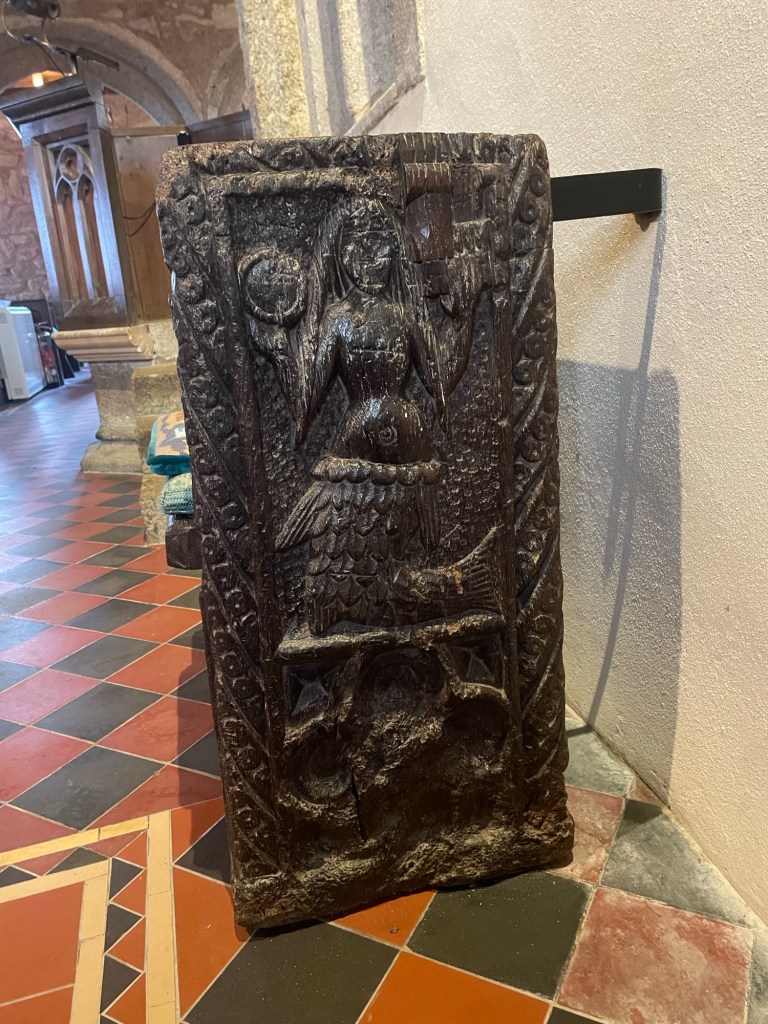
They are wary of sea monsters round these parts, largely thanks to the tale of the mermaid who dressed herself up and stole into Zennor’s church of St Senara, which dates from the 6th century. She would come, so they say, to listen to the heavenly singing of a handsome young man with a velvet voice, one Mathey Trewella. Enchanted by her beauty young Mathey followed her out of the church and was never seen again.
Her legend lives on inside the church with the ‘Mermaid chair’, one of only two remaining bench-ends which are believed to be at least 600 years old.

Doggo enjoyed these walks but the one that remains with him is the hour we spent on the sands of Sennen, just around the corner from Land’s End itself. As soon as he hopped out of the car he knew where he was, cocking his leg against the bins at the top of the car park before padding down to the Surf Beach Bar, sniffing around for a scent perhaps of my daughter Syd who worked there in between Covid lockdowns.
A short pause at the top of the runway down to the beach and then he was away on to the sand, looking out to sea while keeping a respectful distance back from the waves as they rolled in with a great sweep and suck.
We walked towards Cape Cornwall but the tide was high so we had to remain relatively close to the dunes.
The wind blew hard, conjuring up the whispers of voices and the outline of faces that we once knew and loved. I knelt and put my arm around Doggo who leaned into me as he looked out to sea. It was a shared moment of melancholy, a feeling that the past had slipped through our paws like a thousand grains of sand, never to return.
And then the rain began to fall.
“Merci,” said Doggo as we bent out backs into the wind and retraced our steps. “I feel their souls here. Au revoir Charlie, dors bien Zico. Bon voyage mes amis.”
Doggo and I stayed at this lovely little place in St. Just
In Part 3 Doggo heads to Pembrokeshire, Wales…
@Barney Spender 2025
 One Man and His Blog